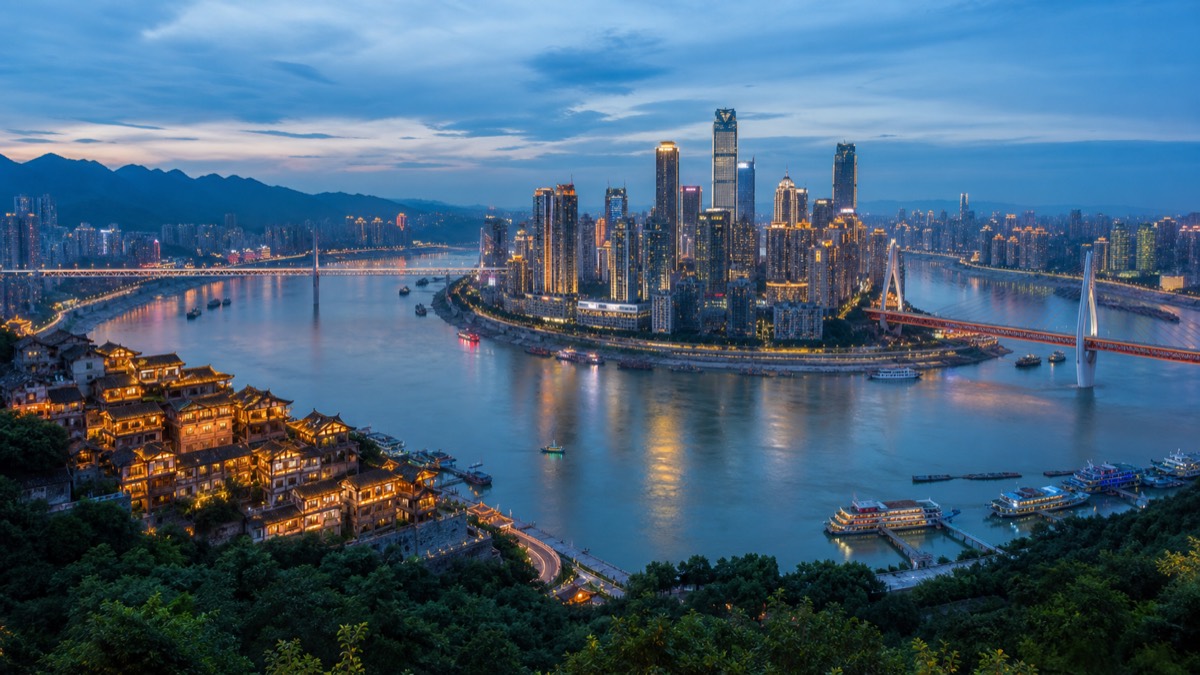
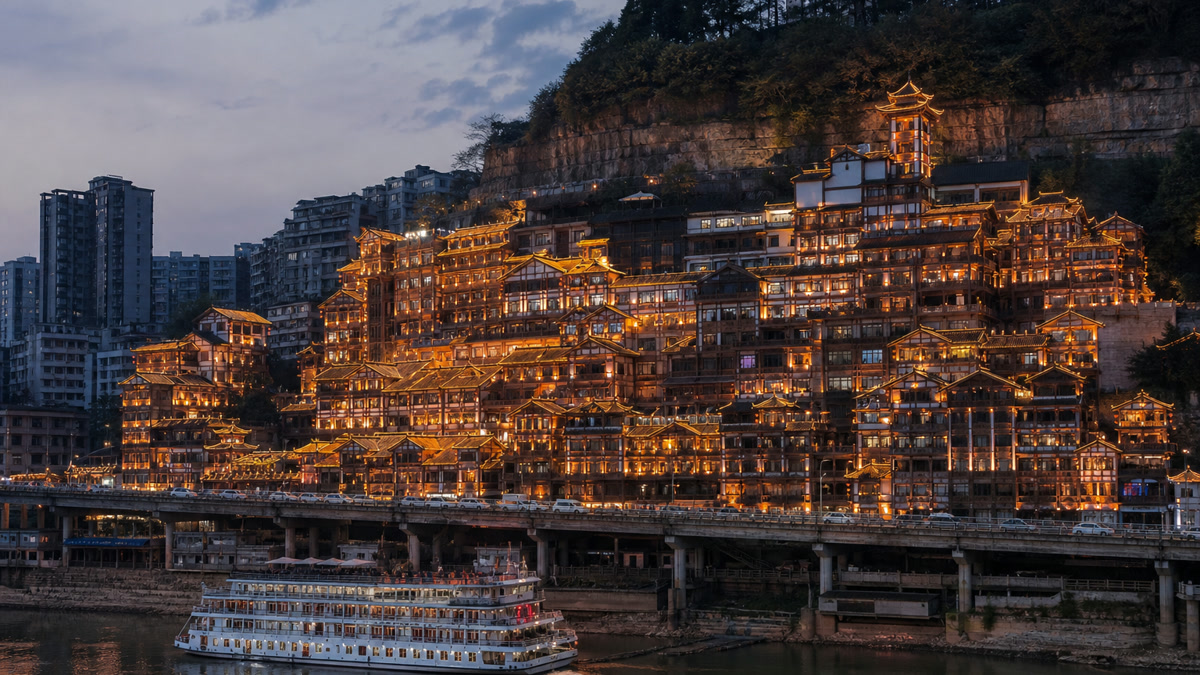
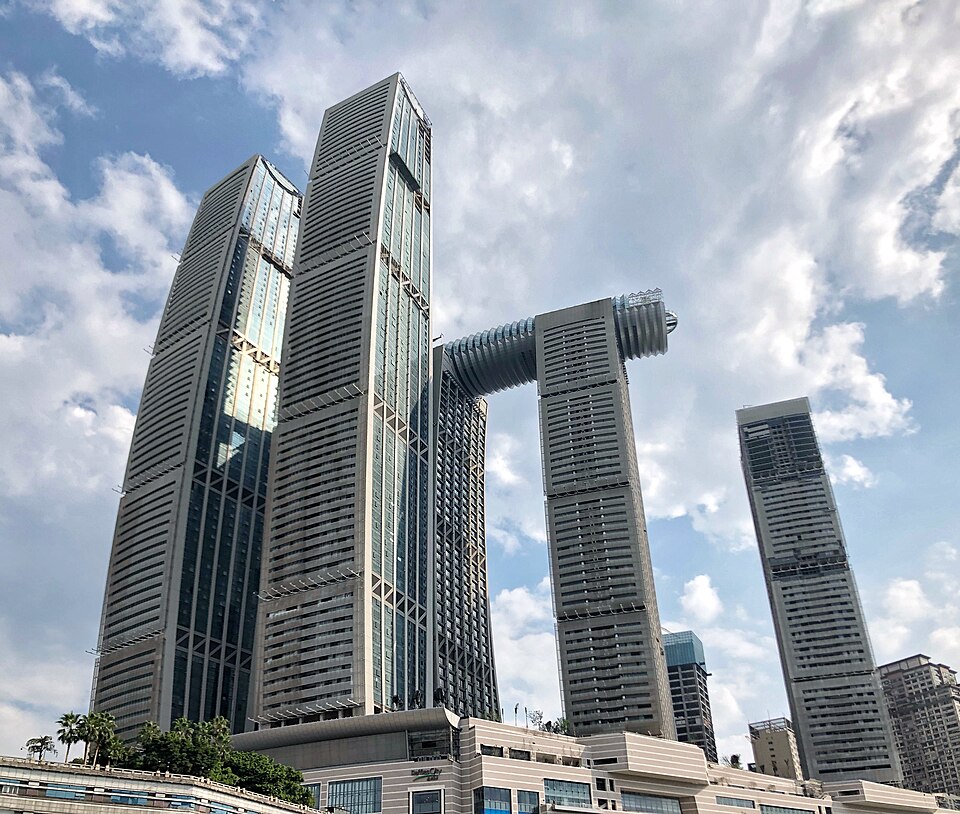
Chongqing's steep terrain and the meeting of the Yangtze and Jialing rivers create one of China's most dramatic urban landscapes. Hongya Cave, the Three Gorges Museum and the night views around the riverbanks explain its visual and historical identity; logistics, manufacturing and southwest-market reach explain its economic weight.
Vertical city
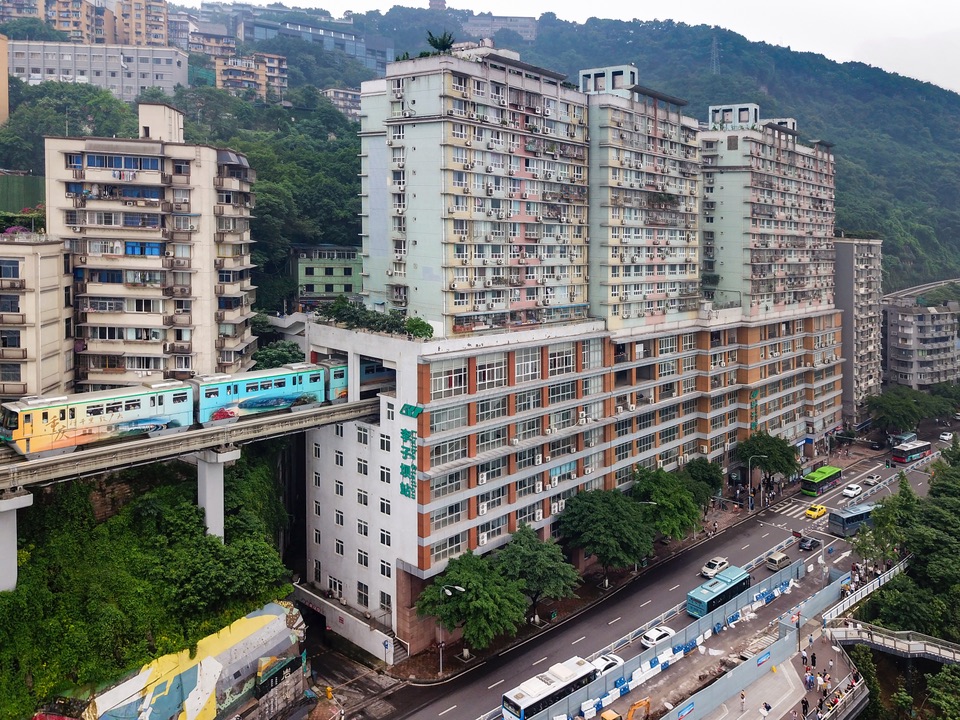
Hills, bridges, layered roads and riverbanks make movement through Chongqing part of the experience.
River history
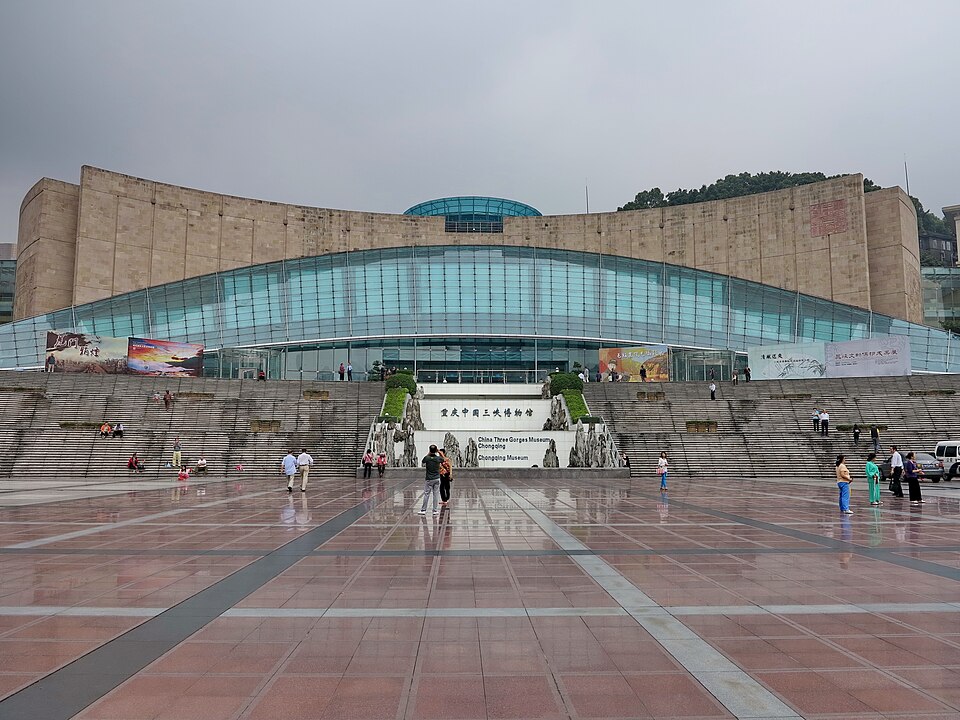
The Three Gorges Museum places the city within the wider history of the upper Yangtze.
Southwest gateway
River transport, logistics and manufacturing underpin Chongqing's regional importance.
When the schedule allows
A Little More of Chongqing, When Time Allows
These are city-specific recommendations for international visitors: major landmarks, credible cultural stops and practical shopping or dining districts.
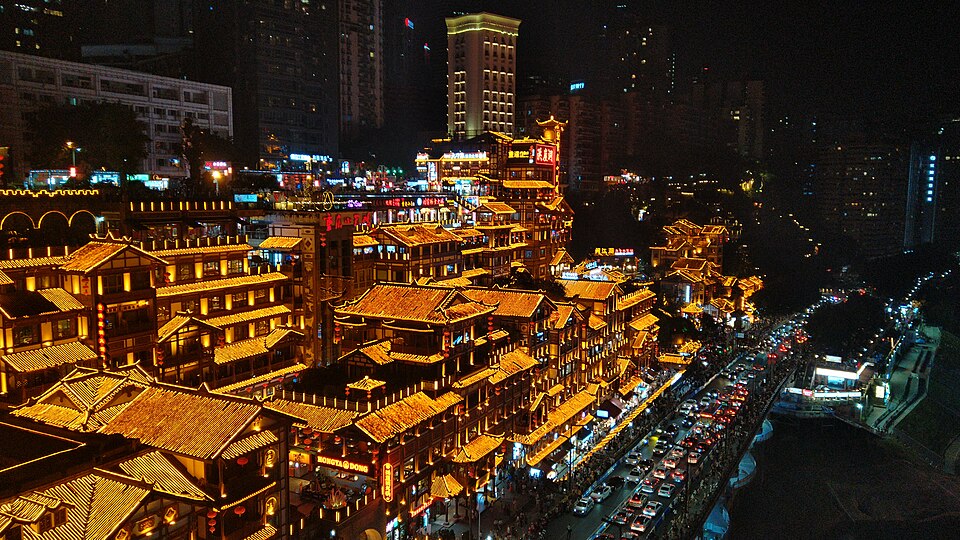
Vertical-city nightscape and CBD
Hongya Cave & Jiefangbei
The classic central Chongqing visual experience. Use it as an evening walking route with Jiefangbei shopping and dining, not as proof of the whole city.
Regional history and river culture
Three Gorges Museum
A practical museum choice near People's Square for understanding the Yangtze region, urban history and the Three Gorges context.
Urban infrastructure viewpoint
Liziba Station & Mountain-City Transit View
A short, visually distinctive stop showing Chongqing's layered topography and rail infrastructure. It is worth a detour only when the route already passes through Yuzhong.
River confluence, retail and architecture
Raffles City Chongqing & Chaotianmen
A contemporary river-confluence landmark with retail and dining, practical for a meal or meeting break when operating around central Yuzhong.
Xentra Global
Connect Your Visit to Real Sourcing Work
We can help connect trade shows with supplier meetings, interpretation, factory visits and post-visit procurement follow-up.